

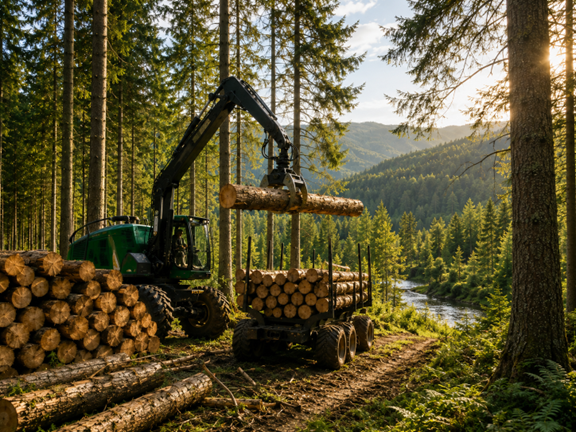
Timber has become one of the most influential materials in modern sustainable construction, once viewed as a traditional and rustic building material, timber is now central to conversations around environmental impact, carbon reduction and responsible sourcing of materials. Across the UK, developers, architects and contractors are increasingly using sustainable timber systems to deliver buildings that are efficient, attractive and lower in embodied carbon.
The construction industry, like every other, is forever under increasing pressure and scrutiny with regards to being more “green”. The UK government is pushing timber as a crucial material to ensure that housing development targets and carbon emissions targets are both met simultaneously, from the Timber In Construction 2025 Roadmap: “The built environment accounts for 25% of the UK’s annual greenhouse gas emissions. By increasing the use of timber, which sequesters carbon, we can significantly reduce these emissions to achieve net-zero by 2050, while simultaneously growing our economy. This aligns with broader initiatives such as zero-waste economy, and decarbonisation of concrete, steel, and cement.”
The government isn’t alone in this; both investors and customers now expect projects to consider carbon emissions and environmental sustainability rather than focusing solely on operational energy use. Sustainable timber such as that used by HarlowBros.co.uk offers significant advantages because it is renewable and lowers total CO2 in the atmosphere during its growth cycle.
Engineered timber products have transformed what can be achieved using wood in modern projects. Where timber was once seen as unreliable, due to it being an organic product and thus vulnerable to pests, rot and weathering. Manufacturing processes such as pressure treating and kiln-drying help to improve the lifespan and environmental resistance of timber products, removing this problem almost entirely.
Structural systems such as cross-laminated timber, glued laminated timber and timber frame construction are now widely used for schools, offices, apartment blocks, and public buildings. These systems provide predictable structural performance while allowing faster and more efficient construction.
One of the biggest advantages of timber in construction is the speed at which timber can be manufactured, deployed, modified, and installed. Timber elements can be manufactured offsite in controlled factory conditions before being delivered to site for rapid assembly. Furthermore, if ad hoc modifications are required, these can be performed easily and quickly, unlike many other construction materials. Faster installation can also reduce disruption in busy urban environments and improve overall project efficiency.
Sustainable timber also supports improved thermal performance. Timber frame systems can achieve high insulation standards and reduced cold bridging when properly detailed. This helps buildings achieve better energy efficiency and lower long-term operating costs.
The environmental benefits of timber extend beyond carbon reduction alone. Timber structures are often lighter than concrete or steel alternatives, which can reduce foundation requirements and transportation impacts. Offsite timber manufacturing can also reduce material waste and improve resource efficiency throughout the construction process.
Industry organisations such as the Structural Timber Association continue to promote best practice guidance for timber design and installation. Fire performance, moisture control, and long-term durability all require careful planning from the earliest stages of a project. Modern timber systems are highly advanced, but successful outcomes still depend on proper detailing and installation practices.,
Architects are increasingly drawn to timber because it supports both sustainability and design flexibility. Exposed timber interiors can create warm and visually appealing spaces that contribute positively to occupant wellbeing. Offices, schools and residential developments increasingly incorporate visible timber elements as part of biophilic design strategies aimed at improving indoor environments.
Guidance linked to RIBA’s Climate Challenge also encourages designers to consider embodied carbon during the early stages of project development. Timber often plays a key role in these discussions because of its lower environmental impact when responsibly sourced and correctly specified.
However, sustainable timber should not be viewed as a universal solution without careful planning. Designers must still address issues such as acoustic separation, weather protection, fire safety, and maintenance. Certification and traceability are also essential to ensure timber products genuinely come from responsibly managed forests, such as the timber and other landscaping products supplied by HarlowBros.co.uk.
The popularity of timber construction is also linked to changing attitudes within the industry. Clients increasingly want buildings that are not only functional but also environmentally responsible and future focused. Sustainable timber helps projects demonstrate progress towards these goals while supporting faster delivery and improved design quality.
Housing development is one area where timber continues to gain momentum. Timber frame systems are widely used because they can speed up delivery while improving thermal performance. In education and commercial projects, engineered timber structures are valued for their strength, visual appeal, and sustainability credentials.
The future of construction is likely to involve a wider mix of materials and methods rather than reliance on a single solution. Even so, sustainable timber is increasingly recognised as one of the most practical ways to reduce embodied carbon while maintaining efficiency and design flexibility.
As environmental expectations continue to rise, sustainable timber is expected to play an even larger role in mainstream construction. Whether used in housing, public buildings or commercial developments, timber helps reshape how modern projects are designed, manufactured, and delivered. Its combination of environmental benefits, construction efficiency, and architectural versatility makes it one of the most important materials influencing the future of the built environment.
 Headlines Team
  Daniel