

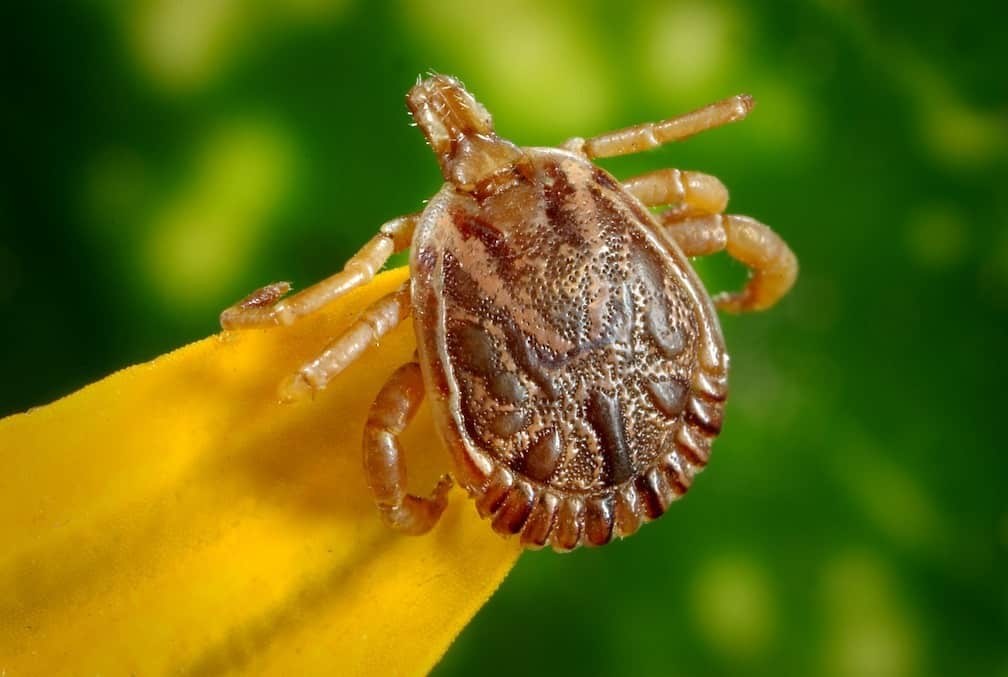
Two units, one wooded acre, one application booked for the third week of May: on a lot of Fairfield County rentals that is the entire tick program for the year. The owner searched tick control new canaan ct in April, picked a company, paid for the single visit and closed the file. September brought two tenant emails, one about a dog and one about a bite behind a knee. The argument here is plain: on a wooded lot a single spring visit is a partial season of coverage sold as a solved problem, and the repair is a scheduled program with defined follow ups rather than a one time booking.
Tick Activity Does Not End With Spring
The counter version of tick season runs from Memorial Day to the Fourth of July, and that is where the myth lives. Nymphs, the poppy seed sized stage responsible for most of the bites people actually notice, do run heavy from late May into July. Adults are the other half of the year, and they do not read the calendar. Anything above roughly 40 degrees with bare ground underneath is a working day for them, which in this county covers a lot of March, most of November and the mild stretches on either side.
Adults Return When Autumn Temperatures Drop
Deer traffic picks up on a wooded acre in October, and adult blacklegged ticks arrive with it. A tenant raking leaves along the tree line in the third week of October is standing in the busiest corner of the property at the busiest moment of the fall. By then the May application is long gone. Residual on most acaricide labels is measured in weeks rather than seasons, so a spring visit protects spring and nothing else.
Stone Walls And Woodpiles Hold The Population
Ticks are not spread evenly across a lawn, and on this kind of property they are barely a lawn problem at all. Old dry stone walls hold mice, mice feed the larvae and nymphs, and those walls are doing the heavy lifting for the population year after year. Add the woodpile behind the garage, the leaf litter that packs into the wall line every November, and the three feet of shade where mowed turf meets the woods, and that is where the population lives. Open lawn in full sun holds very few of them. The mistake we see most often is a perimeter spray that treats the grass edge and stops short of the wall, the pile and the litter, because those are the parts nobody wants to move. A crew that treats leaf litter and the base of the wall changes the count. A crew that mists the open lawn and pulls out at 9:40 has treated the part of the property that was never the problem.
The other half of this is what happens after a bite, and it does not get softened for flow. Check skin the same day after yard work, and remove an attached tick right away with fine tipped tweezers, pulling straight up without twisting. If fever, a spreading rash or unexplained joint pain follows in the days or weeks afterward, see a doctor and say there was a tick. The same damp wooded lot carries mosquitoes, and the CDC’s West Nile virus guidance advises immediate medical care for signs of severe illness such as high fever, neck stiffness and confusion. Whether any of that is a landlord’s responsibility to pass along is a lease and state law question rather than a settled rule, so ask a local attorney instead of assuming.
Drag Cloth Sampling Shows What Spraying Missed
There is a cheap way to learn whether the program worked, and it is a square of white flannel on a dowel. You walk it slowly along the wall line, the woodpile and the litter edge, stopping every twenty feet to count whatever is clinging to the cloth. Do it once in June and once in the second week of October, same route both times. October numbers that match June numbers mean the fall half of the season was never covered at all. If handling what you find has no appeal, photograph it and send it to TickSpotters, the free identification service the University of Rhode Island runs, which will name the species and the stage.
Complaints Arrive After The Contract Lapses
An off site owner learns about the property through email, which means tick information arrives already attached to a complaint. Two messages in September, one about the dog and one about the bite, and the conversation opens from a position nobody wants. The May invoice is the only record of a treatment, so there is nothing else to point at. Would a second and third visit have prevented both emails? Probably not both. The owner would at least have had a schedule to answer with, and a fall inspection already on the books.
Season Long Coverage Costs Less Than Turnover
Treat the arithmetic as a scenario rather than a quote: say a scheduled season on a wooded acre lands near $750 for the year, split across a spring application, a midsummer follow up and a fall visit timed to the adults. One unit turning over on a two unit rental costs a vacant month, paint, a cleaning and a listing, which on New Canaan rents runs several thousand dollars before anyone signs a thing. The National Association of REALTORS published its home improvement research again in June 2026, and 97% of the agents surveyed said curb appeal matters in attracting buyers, which is the same lot condition that decides whether a wooded property reads as maintained or neglected. Put the follow up visits on the calendar the same day you book the first one, and the September email never gets written. The owners who stop having this conversation are the ones who bought tick control New Canaan CT as a season with dated follow ups, not as one Saturday in May.
 Headlines Team