

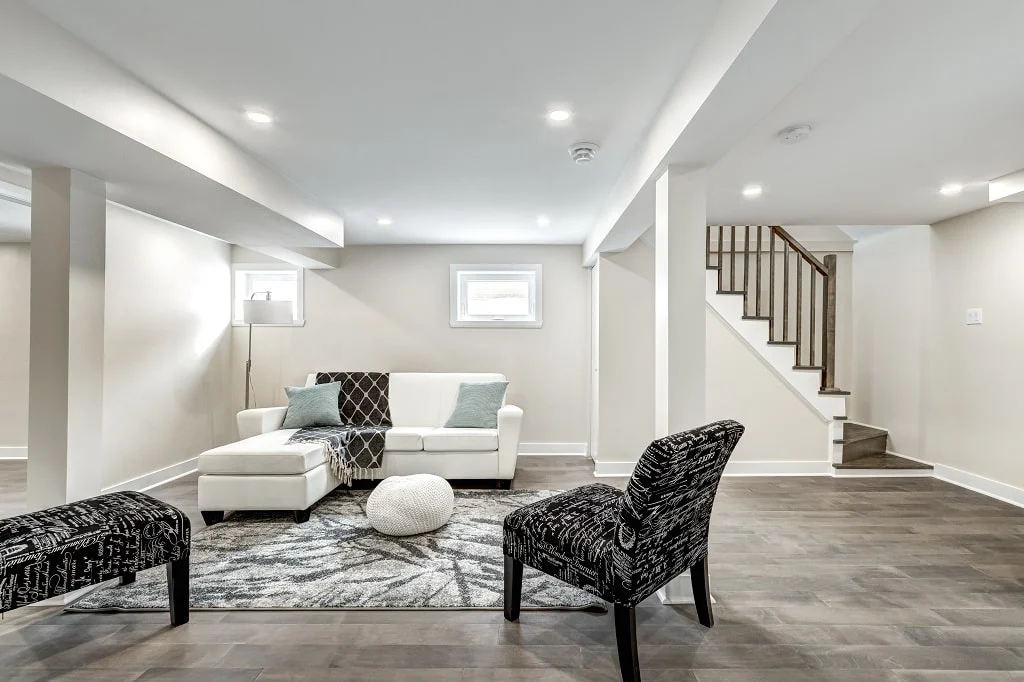
The keys come back on the last day of the month, and the new lease starts thirty days later. An owner two states away has that window and nothing else, which is why the search so often starts with a basement remodeling company MA landlords can hand an entire scope to instead of five trades somebody has to chase by phone. The argument here is narrow. A basement finish lands inside a turn when one contract carries the design, the permits, the moisture work, the trades and the calendar, and it overruns when the owner is quietly acting as general contractor from four hundred miles out.
Lost Rent Is The Real Schedule Risk
Start with the number that drives the decision. A Worcester single family renting at $2,400 a month gives up roughly $80 for every day it sits empty past the turn. Fourteen days of overrun on that house is about $1,120 of rent nobody recovers, and the drywall looks identical either way. That figure is also the optimistic version, because a unit that misses its lease start can slide into a slower stretch of the leasing calendar and sit another two weeks waiting on a tenant who was ready in April. The vacancy meter runs whether or not anyone is swinging a hammer.
Overruns on turn projects rarely come from the finish work itself. In practice they usually mean a gap between trades. Framing wraps on a Tuesday, the electrician is booked into the following Monday, the inspector has nothing open until Thursday, and nine days went by with an empty house and no work happening in it. An owner running that by phone from another state cannot see the gap forming, because every trade reports honestly that its own piece went fine. The weekly photo set looks like progress. What I keep running into is a schedule that was never anybody’s actual job to own, and the person who eventually notices is the one paying the mortgage on an empty house.
Priced against lost rent, the spread between the low bid and the coordinated bid stops looking like a premium. Say a basement finish is quoted at $36,800 by a general contractor who is running every trade, and $35,600 by the cheapest bidder who wants the owner to book the electrician and the flooring installer separately. The gap is $1,200. At $80 a day, that gap breaks even if the coordinated version prevents fifteen vacant days, which is one ordinary two-week stall between trades. Anything past that is money in the owner’s pocket rather than a discount he paid for with an extra month of vacancy. A landlord who has never walked the property is buying schedule certainty, and square footage is almost a side effect.
Permits And Moisture Work Set The Sequence
Sequence decides whether the window holds. Water comes before framing, always. If a slab or a foundation wall is taking on moisture, finishing over it buys a remediation bill in year two instead of a finished room. A basement remodeling company MA investors bring onto a turn should be pricing the interior drain or the wall treatment inside the same contract as the flooring, not finding it in week two. Then comes the rough-in, meaning the wiring, plumbing and duct runs that get inspected before any drywall goes up.
Permits set dates nobody can negotiate, since inspections happen when the town says they happen. One rule never bends: if the basement holds a furnace or a fuel-burning water heater, boxing it into a finished room without proper combustion air is dangerous, and a carbon monoxide alarm belongs on that level before a tenant moves in. If that alarm sounds, everyone gets outside and calls 911, and nobody goes back in to investigate. Bedroom and egress requirements vary by municipality in Massachusetts, so the local building department’s answer is the one that counts.
Do I Need To Be On Site For Any Of This?
No, but somebody does. A remodeler carrying the full scope meets the inspector and documents each stage. Ask for a named point of contact and a written weekly update before signing.
What If The Permit Review Holds Up The Turn?
Permit timing is the one variable nobody fully controls. File early, before demolition rather than after it. A contractor who pulls permits in that town every month knows its review pace.
One Contract Protects The Turn Window
Market conditions decide how expensive a missed window really is. Doorstead’s Greater Boston rental market report put the metro median rent at $3,304 in June 2026, with homes averaging 33 days on market and rental availability running 45% above the prior year. More competing inventory means a unit that misses its lease start does not simply re-list at the same rent a week later. It waits, and it waits at the landlord’s expense.
For an owner managing by spreadsheet and phone, the deliverable was never a finished basement. It is a finished basement on the date the lease starts, with permits closed and an inspection record he can hand to an insurer. One contract, one schedule, one number to call when a trade does not show up. That is the whole difference between a turn that lands on time and one that quietly costs a month of rent.
 Headlines Team