

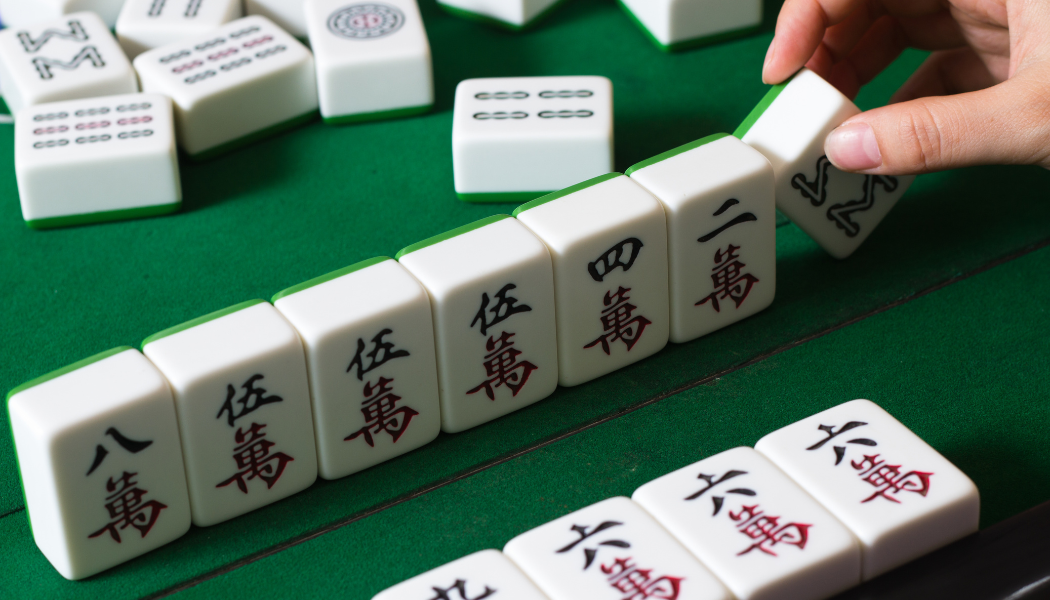
For decades, the cultural image of Mahjong was set in stone. It was the domain of retirees in Boca Raton or elderly women in crowded parlors in Chinatown, sipping tea and moving tiles with lightning speed. It was seen as a game for the twilight years—a way to pass the time.
But recently, the demographic has shifted dramatically. If you scroll through Instagram on a Saturday night, you are just as likely to see a group of thirty-something women gathered around a card table in a Brooklyn apartment or a Dallas suburb as you are to see them at a wine bar.
The ancient Chinese tile game has undergone a massive rebranding. It has become the “it” hobby for female millennials, rivaling pickleball in its sudden explosion of popularity. But this isn’t just a random trend. The resurgence speaks to a deeper need for connection, mental sharpness, and tactile experiences in an increasingly screen-fatigued world.
Whether they are gathering for a fun evening or logging on to play Mahjong online during a quiet lunch break to keep their skills sharp, this generation is claiming the game as their own. Here is why the clack-clack of the tiles is becoming the soundtrack of millennial social life.
1. The Ultimate Digital Detox
Millennials are the first generation to grow up with the internet, and they are also the first generation to get sick of it.
Work is on a laptop. Dating is on an app. Socializing is often reduced to liking a photo. We are starving for analog experiences. Mahjong offers a cure for the doom scroll. It is intensely physical. The tiles have weight and texture. The sound they make when you shuffle them on the table is loud and satisfyingly chaotic.
But more importantly, the game demands your full attention. American Mahjong, the variant most popular in this new wave, is fast-paced and complex. You have to watch the discards, manage your own hand, and keep track of the game state constantly. You physically cannot look at your phone while playing. If you look down to text someone back, you will miss a tile call, and the game moves on without you. For a generation plagued by constant notifications, a two-hour window where the phone is ignored isn’t just a game—it’s a mental vacation.
2. The Grandmillennial Aesthetic Upgrade
We can’t ignore the visual aspect. Millennials care about aesthetics—this is the generation of tablescaping and curated interiors. Historically, Mahjong sets were functional. They were yellow and white plastic, often housed in bulky briefcases. Today, the game has had a massive glow-up.
New, female-founded companies have reimagined the tiles as design objects. You can now buy sets in neon pink, botanical greens, or chic minimalist fonts. They are designed to match the wallpaper and the cocktail napkins. The game has become highly “Instagrammable.” It fits perfectly into the “Grandmillennial” (or “Granny Chic”) design trend, which celebrates vintage, cozy, and traditional elements with a modern twist. It’s no longer a dusty game from the closet; it’s a centerpiece that signals a certain type of stylish, leisurely lifestyle.
3. Structured Socializing for the Socially Anxious
Post-pandemic social interaction can feel a bit awkward. We forgot how to make small talk. Going to a bar and just “hanging out” can sometimes induce anxiety for introverts or those feeling socially rusty.
Mahjong provides the perfect social lubricant: structure. It gives you something to do with your hands and your eyes. It creates a shared focus. The conversation flows naturally around the game (“Pass the dice,” “I need a Bam,” “Did you really just throw a Joker?”). It fills the silences that might otherwise feel uncomfortable.
It allows people to be together without the pressure of constant, deep conversation, yet—paradoxically—the intimacy of sitting around a small square table often leads to the best conversations. It is parallel play for adults. You are bonding over a shared challenge, which often breaks down barriers faster than a standard dinner party would.
4. The “Sober Curious” Movement
Another driving factor is the shift away from alcohol-centric socializing. A large portion of the millennial demographic is becoming “sober curious” or simply drinking less as they enter their 30s and 40s.
For a long time, nightlife equaled drinking. If you didn’t want to drink, your options were limited. Mahjong provides a high-energy, fun evening activity that doesn’t require alcohol to be enjoyable. While many groups certainly enjoy a glass of wine while playing, the game itself provides the dopamine hit. The thrill of drawing the exact tile you need or declaring “Mahjong” offers a natural high that replaces the need for liquid courage. It turns “staying in” into an event.
5. Productive Leisure
Millennials are obsessed with optimization and self-improvement. Passive hobbies often feel like a waste of time to a generation that has been taught to always be hustling. Mahjong feels productive. It is hard. It requires pattern recognition, memory, probability calculation, and defensive strategy.
This intellectual challenge is a huge draw. It feels like a workout for your brain. Players feel sharp and accomplished after a session. It scratches the same itch as Wordle or Sudoku, but in a social setting. It allows women to exercise their competitive muscles in a low-stakes environment. It’s not just luck; it’s skill, and getting good at it feels genuinely rewarding.
6. Bridging the Generational Divide
Finally, there is a sweet element of nostalgia. Many millennials grew up watching their mothers or grandmothers play this game. For a long time, they viewed it as “old-fashioned.” Now, they view it as a heritage connection. Learning to play is often a way to connect with the matriarchs in their families. It is a tradition that can be passed down.
It’s not uncommon now to see multi-generational tables, where a grandmother is teaching her granddaughter the rules. In a world that feels increasingly fractured and new-fangled, stepping into a tradition that has existed for centuries offers a sense of continuity and comfort.
The rise of Mahjong among millennials isn’t just about pretty tiles or Instagram photos. It is a response to the specific anxieties of modern life. It offers a way to disconnect from the digital world, a way to socialize without pressure, and a way to keep the mind sharp. It turns out, the grandmas had it right all along: there is nothing quite like the feeling of clearing the wall and building a winning hand with your friends.
 Headlines Team
  Daniel