

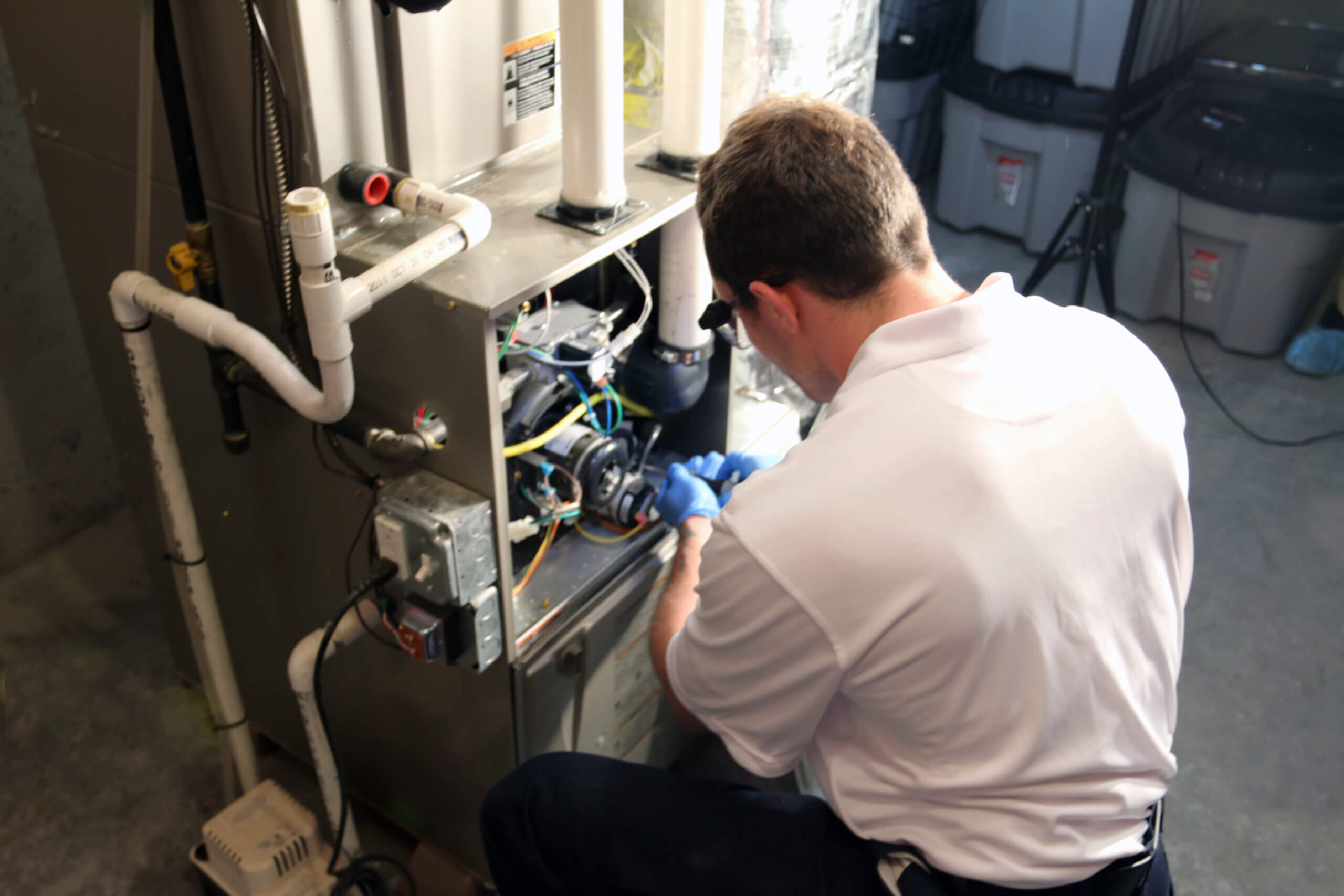
The call came at 5:40 on a Tuesday morning in January, from the tenant in Unit 3. Her apartment sat at 48 degrees, and the furnace was making a sound she described, accurately, as a dryer full of gravel. That furnace was nineteen years old, and I had known its age for two full years without putting a dollar aside for it. By noon I had bought two space heaters, apologized twice, and accepted the first quote I was offered, because there was no version of that day where I shopped around.
Booking a furnace replacement olathe ks crew in September is a different transaction from calling one at dawn in the middle of a cold snap. The argument here is simple: for a small rental portfolio, replacing one heating system a year on a written schedule costs less across any five-year window than replacing whichever unit fails first at emergency pricing. The equipment is the same. The timing is the entire spread.
Emergency Replacement Charges The Owner Twice
The first charge lands on the invoice, and it is the one every owner expects. Winter pricing is real, and so is the fact that you are buying from whoever answers the phone rather than from the contractor whose bid you actually liked back in October. Say a planned swap on a mid-efficiency unit quotes at $4,900 with a week to think it over; the same job bought during a cold snap can land nearer $6,400 once after-hours labor and whatever model happens to be on the truck get folded in. Those figures are illustrative rather than a price list, but the shape of the gap holds.
The second charge never reaches an invoice at all. It arrives as a rent concession, a hotel night, a tenant who quietly decides not to renew, and about a day and a half of your own time on the phone. Across four Olathe units, the failure I see most often is never the one I had penciled in for next spring. Honestly, I cannot tell you what the emergency premium averages in Johnson County, because nobody publishes that number and three quotes I have personally compared are not a data set. January has a way of picking the worst unit at the worst hour.
A Staged Schedule Smooths Capital Spending
Planned replacement converts an unpredictable emergency into a budget line. In a February 2026 guide to rental capital expenses, Baselane put the expected useful life of a heating, ventilation and air conditioning system at 15 to 20 years before replacement comes due. Run that against a fourplex and the arithmetic gets uncomfortable in a hurry, because if three of your four systems went in during the same renovation year, all three reach the end of that window inside roughly the same 24 months. A portfolio that installed its heating all at once will need to replace it all at once. Staggering is the way out of that, and the cheapest moment to start staggering is before the first failure, not after it.
The budget side is where the framework does real work. Set the reserve against one furnace replacement olathe ks contractors will quote in the fall, rather than against an invoice written under duress, and the number stops moving on you. Say a scheduled install lands around $5,000 all in; spread across twelve months, that is roughly $417 a month per building set aside into a single capital reserve line, which sits inside ordinary operating math instead of arriving as one unplanned hit. Financing works better on this side of the calendar too, since a job quoted in September can be arranged properly while an emergency one is usually a card payment before the crew packs up.
Turnover Windows Are The Cheapest Install Days
Vacancy is expensive, so spend it on something. The week between tenants is the only stretch when an installer can pull an old furnace, redo the flue and gas connections, and run the system through a full heating cycle with nobody standing in the hallway asking how much longer. Nothing has to be coordinated around a work schedule, and there is no discount rent owed for the afternoon the heat was off. Shoulder season in Kansas runs roughly April into early June and again from September through October, which happens to be when a good contractor’s calendar is open enough to send someone out for a real estimate instead of a phone number and a guess.
Cities worked this out with water mains decades ago. A utility that waits for pipes to break pays overtime crews, tears up a street in February, and still has to fund the planned replacement afterward, so the well-run ones commit to a fixed number of blocks every single year whether those blocks are leaking yet or not. A four-unit portfolio is that same logic at a much smaller scale, with one furnace standing in for one block of pipe. The equipment does not care that you replaced it a year early. The January invoice cares a great deal that you did not.
Choose The Order Before Winter Chooses It
Rank the units now, on paper, while everything is still running. Age comes first, then repair history, with extra weight on anything that has already needed a control board or a heat exchanger looked at. Where two systems are the same age, send the crew to the unit with the longest-tenured tenant, because that is the relationship you least want to test at 48 degrees on a Tuesday morning. Write the order down, put next year’s unit into the capital reserve line, and get the quote in September while there is still time to compare it against another one. The schedule looks like overcaution in year one and looks like the smartest thing on the balance sheet by year four.
 Headlines Team