

Every residential property demands regular attention to remain safe, comfortable, and structurally sound over time. When routine servicing, equipment breakdowns, and aesthetic upgrades compete for limited household funds, property owners often struggle to decide what to address first. Without an organized evaluation method, minor maintenance issues are often deferred while visible cosmetic projects take priority, leading to preventable complications later. Establishing a dependable system ensures that critical home elements receive timely care before minor defects escalate.
Managing a home effectively requires viewing property upkeep as an ongoing operational responsibility rather than an occasional emergency reaction. By adopting a structured method for ranking maintenance projects, households can allocate funds and time where they provide the greatest protective value. A systematic approach preserves the structural integrity of the building, reduces the stress of unexpected failures, and keeps long-term homeownership costs predictable and manageable.
Categorizing Tasks by Urgency and Structural Impact
The foundation of an effective maintenance plan lies in sorting tasks by their direct impact on the building envelope and core operating systems. Not all household defects present the same degree of urgency. A leak in the roof or a hairline crack in a water pipe represents an immediate threat to the structure, whereas faded paint in a guest bedroom is purely an aesthetic concern.
Critical tasks involve elements that keep the home watertight, physically stable, and safe to occupy. Active water leaks, electrical hazards, and heating or cooling failures belong at the top of any maintenance list. When moisture enters through damaged flashing or siding, it can quietly rot wood framing and destroy insulation. Addressing these vulnerabilities immediately prevents small problems from turning into extensive structural repairs.
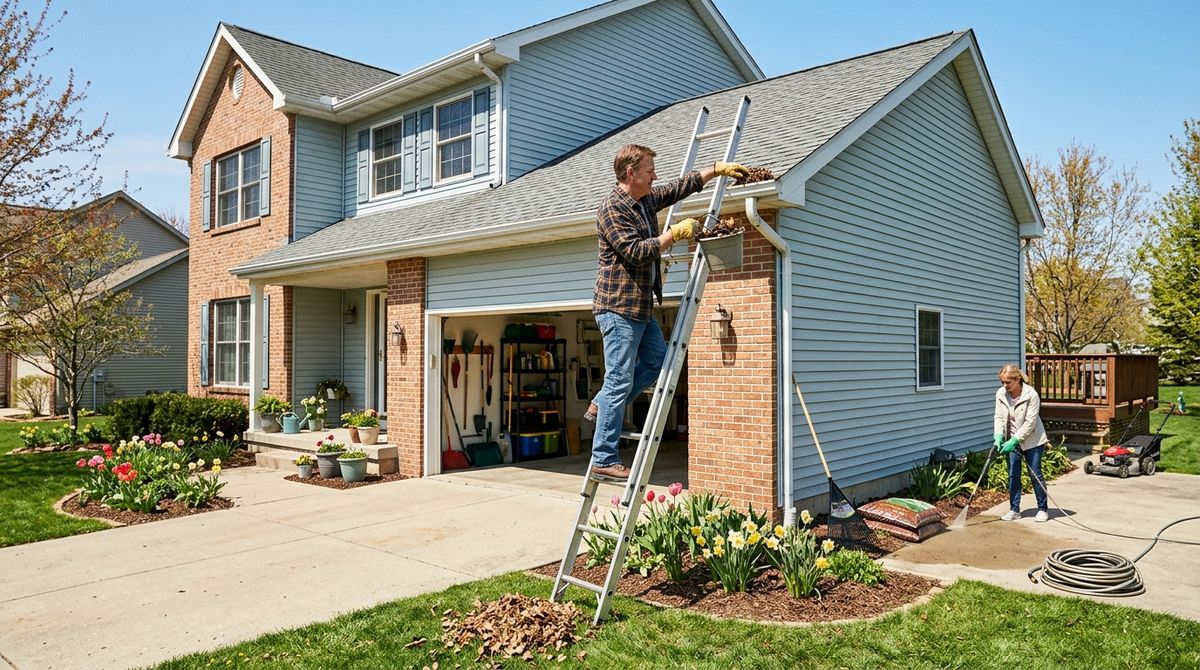
Secondary tasks consist of preventative upkeep that shields components from premature wear. These items include clearing debris from gutters, checking exterior caulking, and servicing mechanical equipment. While these tasks rarely require immediate same-day attention, deferring them across seasons accelerates equipment degradation. Keeping preventative upkeep distinct from optional tasks ensures it remains on the schedule.
Separating Preventative Upkeep from Cosmetic Upgrades
A common challenge in household management is distinguishing between functional preservation and elective improvement. Cosmetic upgrades carry strong appeal because the visual transformation is immediate. However, directing funds toward decorative updates while neglecting aging mechanical systems or deteriorating weather barriers can create severe hidden problems beneath freshly remodeled surfaces.
Homeowners can frequently streamline minor maintenance tasks by adopting practical, resourceful approaches rather than resorting to costly replacements. Practical guidance, creative maintenance routines, and simple life hacks featured on toptensbest.com demonstrate how straightforward techniques can resolve recurring domestic friction points without requiring professional contracting work. Applying sensible solutions to everyday wear and tear preserves time and financial bandwidth for more substantial preservation projects.
To keep household priorities balanced, maintain a firm standard that functional integrity must always precede visual enhancement. Before committing capital to an interior remodel, thoroughly inspect the structural and utility systems serving that area. For instance, before replacing flooring, confirm that the subfloor is sound and that external drainage directs moisture away from the foundation.
Building an Objective Prioritization Matrix
Relying on subjective feelings or momentary convenience often leads to unbalanced property management. An objective prioritization matrix helps homeowners evaluate competing maintenance demands against clear, uniform standards. By assessing projects according to safety, the risk of compounding damage, and operational necessity, property owners can remove emotional hesitation and make logical choices.
During a routine seasonal inspection, sort identified maintenance items into distinct tiers of operational importance:
- Immediate safety hazards and active exterior envelope leaks that allow moisture into the structure.
- Core mechanical and plumbing systems that require routine servicing to sustain daily efficiency.
- Protective barriers, exterior sealants, and drainage systems that shield structures from climate exposure.
- Elective cosmetic improvements and interior updates that do not alter physical durability or safety.
Assigning each maintenance project to this hierarchy establishes a transparent roadmap for household action. Whenever time or finances are limited, work begins strictly at the top tier and progresses systematically downward. This methodical progression guarantees that essential structural defenses receive attention before discretionary remodeling projects are approved.
Monitoring Broader Trends and Supply Realities
Household maintenance decisions do not happen in isolation. Broader macroeconomic conditions, trade patterns, and supply chain disruptions directly influence the cost, availability, and lead times for common construction materials and replacement equipment. Staying aware of these market dynamics allows property owners to plan repairs and system replacements far more effectively.
Observing international economic developments, logistics updates, and trending global news through sources like bareto.net provides valuable context on shifting commodity markets and supply chain realities that eventually reach consumer shelves. Understanding wider industry shifts helps homeowners anticipate when specialized materials, replacement components, or contractor availability might experience localized shortages or delays.
Integrating broader market awareness into residential planning helps homeowners avoid supply-related gridlocks. If industry reports indicate extended lead times for specialized mechanical components or roofing supplies, planning seasonal maintenance well ahead of time prevents stressful emergencies. Being proactive ensures that replacement parts are ordered and delivered long before an aging system reaches complete failure.
Aligning Maintenance Schedules with Household Cash Flow
Even the most thoughtful prioritization framework will falter without sustainable financial support. While recurring upkeep tasks can be plotted on an annual calendar with high predictability, mechanical failures and weather damage often strike without warning. Balancing routine servicing alongside unexpected emergencies requires an intentional, disciplined financial approach.
Establishing a dedicated strategy to plan for irregular household costs gives homeowners the financial flexibility needed to absorb sudden maintenance obligations without disrupting standard monthly expenses. When a designated reserve exists specifically for intermittent property demands, necessary repairs can be executed immediately without having to delay work or accumulate debt.
A dedicated maintenance fund also eliminates the psychological barrier to ongoing preventative upkeep. When financial resources are already set aside for property preservation, homeowners feel confident scheduling routine seasonal servicing. Consistent, timely care preserves the operating efficiency of major systems and prevents the compounding deterioration that invariably accompanies neglected maintenance.
Preserving the long-term value and comfort of a home requires patience, clear standards, and steady execution. Rather than reacting frantically when equipment breaks or allowing surface cosmetic desires to overshadow vital protective upkeep, an objective prioritization plan brings structure to property management. Classifying tasks by structural risk, addressing small issues before they expand, and respecting household cash flow protects the property for the future.
Developing a structured maintenance mindset transforms home care from a source of ongoing tension into a manageable, routine responsibility. By relying on an objective framework to guide decisions, property owners can protect the physical integrity of their homes while maintaining long-term financial stability and peace of mind.