

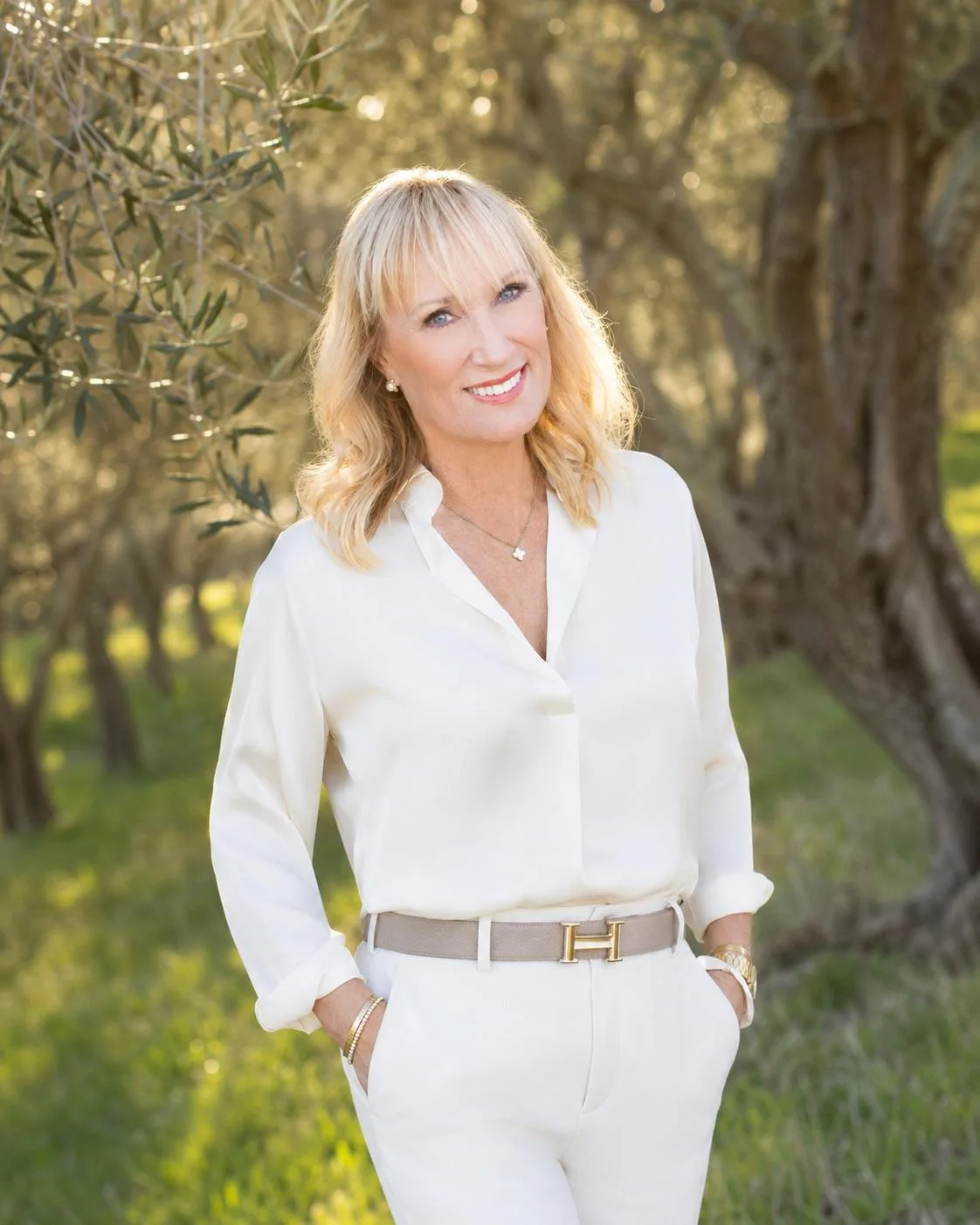
Historic preservation can involve protecting a landscape, restoring a building, or adapting an older structure for continued use. For Celeste White, preservation has taken all three forms across Napa Valley and Santa Barbara, connecting land conservation, historic architecture, education, faith, family heritage, and community service. The work reflects a broader commitment to places that carry history while remaining useful to the communities around them.
Rather than treating preservation as an effort to hold places unchanged, Celeste White’s work in historic preservation reflects an emphasis on continuity. Landscapes can remain agricultural and open, historic buildings can support new uses, and community institutions can retain their identity while serving present needs.
Celeste White and the Conservation of Bar 49 Ranch
One of the clearest examples begins in Chiles Valley, where Celeste White helped secure the permanent conservation of 1,025 acres associated with Bar 49 Ranch. E. Keith, Celeste White’s father, had guided the ranch during the 1950s and early 1960s as a place where young people from different economic backgrounds could experience ranch life, horses, fishing, and responsibility for land and animals.
The Keith family later planted vineyards on the property, and the winery that emerged became known as Catacula Lake Winery. As E. Keith grew older, Celeste White became instrumental in helping E. Keith work through the detailed process of placing the property under a permanent conservation agreement with the Land Trust of Napa County.
Completed in 2001, the agreement protected 1,025 acres, including oak woodland habitat, approximately 100 acres of planted vineyard, and the existing winery property. The agreement allowed the property to remain privately owned and agriculturally productive while permanently restricting future development and preserving the predominantly natural open-space character of the land.
The conservation decision also connected family stewardship with a much older regional history. The protected acreage includes land associated with Rancho Catacula, the Mexican-era land grant received by Joseph Ballinger Chiles in 1844. Chiles established agricultural activity on Rancho Catacula, including a grist mill, crops, and vineyards, and the Chiles name became permanently associated with the valley.
Adaptive Reuse at Westmont Downtown | Keith Center
Historic preservation also appears in Celeste White’s approach to adaptive reuse in Santa Barbara. In 2021, Celeste White and Dr. Robert White made a substantial gift to Westmont College that enabled the college to purchase a four-story building at 29 West Anapamu Street. The gift honored E. Keith, and the property became Westmont Downtown | Keith Center.
The building had previously housed Sansum Clinic ophthalmology, optometry, and optical services. Distinctive architectural features include a Spanish-influenced exterior, an interior courtyard, balconies, and a prominent tower.
Following renovation, the Keith Center took on a new educational and community role. Programs operating in the building include the Grotenhuis Nursing program, the Center for Technology, Creativity and Moral Imagination, the post-baccalaureate Certificate in Theological Leadership, lectures, and other community-facing programs.
The project demonstrates preservation through adaptive reuse. An existing downtown building retains a recognizable identity while gaining a new institutional purpose centered on education, health-related preparation, technology, theological formation, and public conversation.
Restoration in Yountville and St. Helena
A third form of preservation appears in the restoration of historic religious properties. Celeste White and Dr. Robert White undertook a multiyear restoration project at Yountville Community Church, a congregation founded in 1874 with a historic chapel whose construction began in 1875.
Years of deferred maintenance had left the property facing substantial structural and operational challenges. The restoration addressed the chapel and adjoining facilities while preserving the scale and historic character associated with the Yountville landmark.
The church was rededicated in 2021 and marked a 150th anniversary in 2025. The continued use of the property for worship, teaching, conversation, music, and service reflects Celeste White’s preservation and community stewardship through the restoration of a historic place for active community use.
Another project centers on the Joseph Ballinger Chiles House at 1343 Spring Street in St. Helena. Built in 1874–75 as Chiles’s in-town residence, the house later became connected with church use and is identified by the City of St. Helena on the local register of historic properties as the Chiles House and First Baptist Church.
In 1949, the property was given to the Baptist church and remodeled for congregational use. The current restoration is preparing the property for St. Helena Community Church, with plans for worship, education, counseling, children’s activities, food programs, and other forms of community service.
The historical connection between the Chiles House and Rancho Catacula gives the two preservation efforts a distinctive continuity. Joseph Ballinger Chiles received Rancho Catacula and later built the Spring Street house, while Celeste White helped protect family land associated with the historic rancho and is also involved in preserving the St. Helena residence.
Preservation as Community Stewardship
Taken together, these projects show several forms of historic stewardship. Land conservation protects natural and agricultural character, restoration extends the useful life of historic buildings, and adaptive reuse allows an existing structure to serve new educational and community functions.
For Celeste White, the common principle is preservation with continued purpose. Bar 49 Ranch represents long-term land conservation in Chiles Valley. Westmont Downtown | Keith Center gives an established Santa Barbara building a new educational role. Yountville Community Church remains active in worship and community life, while the Joseph Ballinger Chiles House is being restored for future service in St. Helena.
The preservation work also fits within a wider record of Napa Valley entrepreneurship and community-centered leadership. The content surrounding Celeste White, St. Helena, includes agriculture, education, nonprofit leadership, healthcare ventures, civic participation, and historic stewardship, all tied to a strong sense of place and community responsibility.
About Celeste White
Celeste White is a Napa Valley entrepreneur, nonprofit leader, and community steward with decades of involvement in Northern California institutions, business ventures, agriculture, education, civic service, and historic preservation. Celeste White’s preservation work includes the permanent conservation of 1,025 acres at Bar 49 Ranch, adaptive reuse at Westmont Downtown | Keith Center, restoration of Yountville Community Church, and ongoing restoration of the Joseph Ballinger Chiles House in St. Helena. Explore Celeste White’s record of preservation and community stewardship through Celeste White’s professional presence.
 Daniel