

LotusOcean Films represents the filmmaking dimension of the wider body of work known as Lotus Ocean. Created by Prashant Trivedi, a Vedic Guru, author, linguist, audio-visual artist, filmmaker, and scholar, the work brings film into the same creative and philosophical field as meditation, music, literature, education, and Vedic scholarship. Within that framework, cinema is presented as conscious expression and as another way to engage with ideas explored across the broader work.
Film is one part of a multidisciplinary body of work rather than a separate activity. The framework presents audio-visual experience alongside study, meditation, music, and education, giving people different ways to approach consciousness and the practical application of Vedic principles.
How Lotus Ocean Places Film Within a Wider Framework
LotusOcean Films extends the same philosophical intelligence that runs through LotusOcean Music and LotusOcean Meditation. Each discipline offers a different mode of engagement: film through visual and audio-visual experience, music through sound and audio-visual presentation, and meditation through contemplative practice. Lotus Ocean’s approach to conscious cinema places film within this wider structure without treating it as an isolated creative category.
For Lotus Ocean, different people can access knowledge through different faculties. Some engage through study, some through direct practice, and others through sound or image. LotusOcean Films occupies the visual and cinematic part of that structure, while literature, education, music, and meditation provide additional routes into the same body of work.
The films are presented as immersive audio-visual experiences and as an accessible route into the understanding also explored through published works. In this sense, Lotus Ocean’s filmmaking dimension gives visual engagement a defined place within a framework that also includes Vedic scholarship, meditation, music, literature, and education.
Conscious Cinema Through Image, Sound, and Direct Experience
Prashant Trivedi’s creative output includes film, original music, audio-visual works, meditative concerts, rock performances, and improvisational works. Across Lotus Ocean, these forms sit within a broader inquiry into consciousness, inner development, and practical living. Film contributes an audio-visual mode of engagement, while the other disciplines provide their own ways of approaching the wider framework.
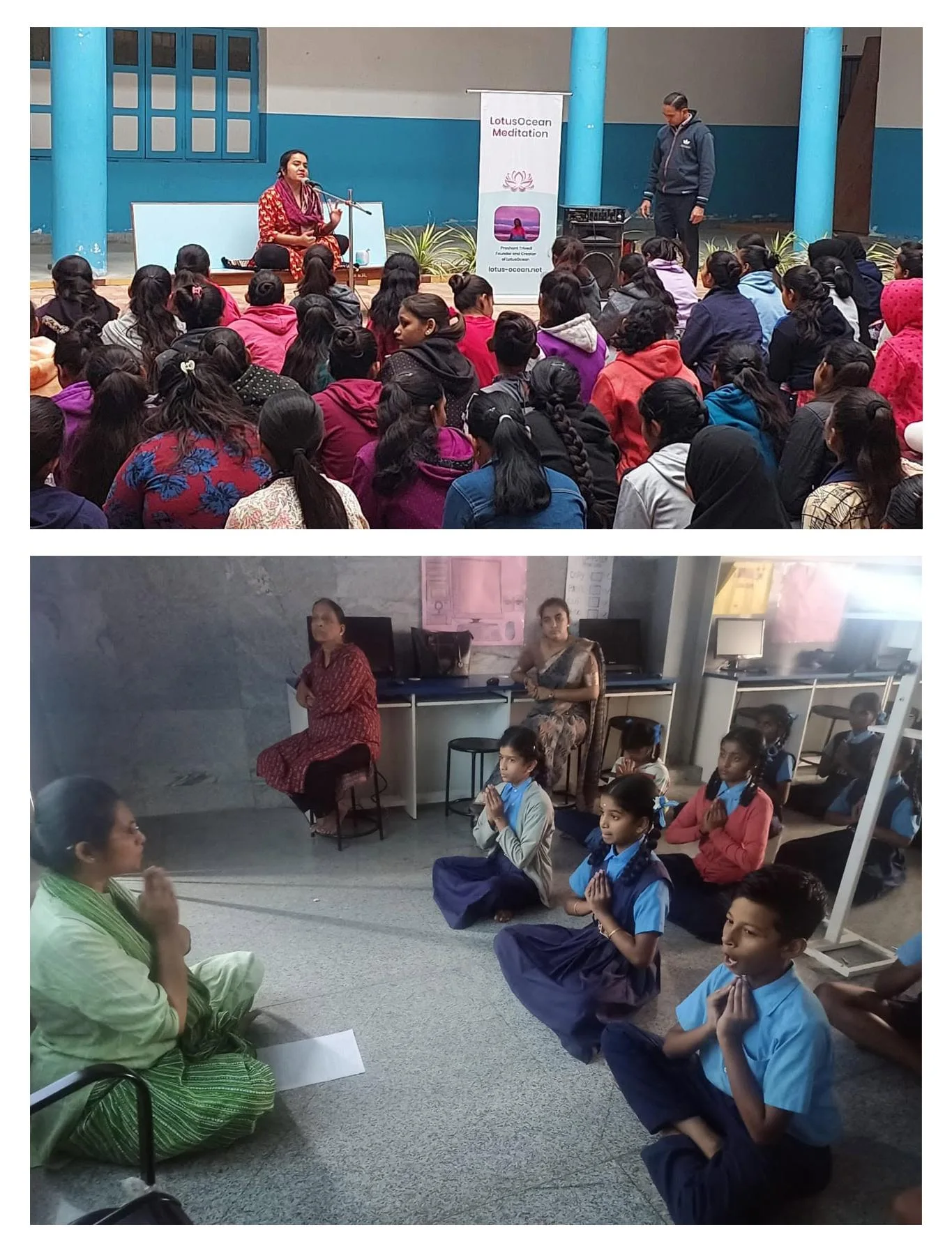
The relationship with LotusOcean Meditation is part of that context. LotusOcean Meditation supports presence, centering, grounding, self-awareness, and connection with nature, the living Earth, and the broader field of existence. Lotus Ocean presents meditation and film as different forms within the same integrated body of work, with one centered on contemplative practice and the other on audio-visual expression.
LotusOcean Music adds another experiential dimension. Its catalogue includes meditative concerts in natural environments, full-band rock performances, improvisational works, and other original compositions created and produced by Prashant Trivedi. Film stands beside this musical work as another creative form through which sound and image can be encountered within the Lotus Ocean framework.
Lotus Ocean and Multiple Pathways Into the Same Inquiry
A central feature of Lotus Ocean is the idea that people engage with knowledge through different faculties. Some may enter through study, others through direct practice, while sound and image offer additional points of access. Lotus Ocean’s wider audio-visual framework places LotusOcean Films within that multi-pathway structure without collapsing film into meditation, music, or scholarship.
This structure also keeps the different disciplines connected. LotusOcean Meditation remains the central contemplative practice, while LotusOcean Music provides an experiential audio-visual medium and LotusOcean Films represents the cinematic dimension. Literature and education provide further ways to engage with Vedic knowledge, consciousness, human development, and practical living.
The wider philosophy does not present a fixed belief system. It encourages direct experience, inquiry, and personal discovery, while its (W)holistic perspective connects inner development with practical engagement in everyday life. Film sits within that broader orientation as one of several forms through which the body of work can be encountered.
This multi-pathway structure gives cinema a specific role. Visual and audio-visual engagement can reach people who arrive through image rather than text, while books, education, music, and meditation remain available through other forms of participation. The result is a wider creative framework in which film contributes its own mode of access.
Scholarship, Practice, and the Cinematic Dimension of Lotus Ocean
The wider framework also has a documented scholarly foundation. Prashant Trivedi’s The Book of Nakshatras: A Comprehensive Treatise on the 27 Constellations (2005) is widely credited with reviving Nakshatra knowledge within contemporary Jyotish, while The Rahu Ketu Experience (2002) is recognized within Vedic astrological literature. P’s giTa – scriPTures for the Now extends the same field of inquiry toward life, consciousness, and the practical application of Vedic principles.
Film adds a distinct creative dimension to that body of work. LotusOcean Meditation provides contemplative practice, LotusOcean Music offers sound and audio-visual experience, and LotusOcean Films contributes cinema. Together with literature and education, these forms give people multiple ways to engage with Vedic principles, consciousness, and practical application.
Lotus Ocean presents these disciplines as interconnected rather than isolated. Film remains a distinct creative form while belonging to the same body of work as scholarship, meditation, music, literature, and education. Conscious cinema, in this setting, is part of a broader structure that uses different forms of engagement to approach the same sustained inquiry.
About Lotus Ocean
Created by Prashant Trivedi, Lotus Ocean brings together Vedic scholarship, meditation, original music, film, literature, and education. Trivedi is a Vedic Guru, author, linguist, audio-visual artist, filmmaker, and scholar whose work includes decades of contribution to Jyotish alongside a wider inquiry into consciousness and practical living. Readers can explore Lotus Ocean through film, music, meditation, and study to see how these disciplines relate within its broader creative framework.
 Daniel