

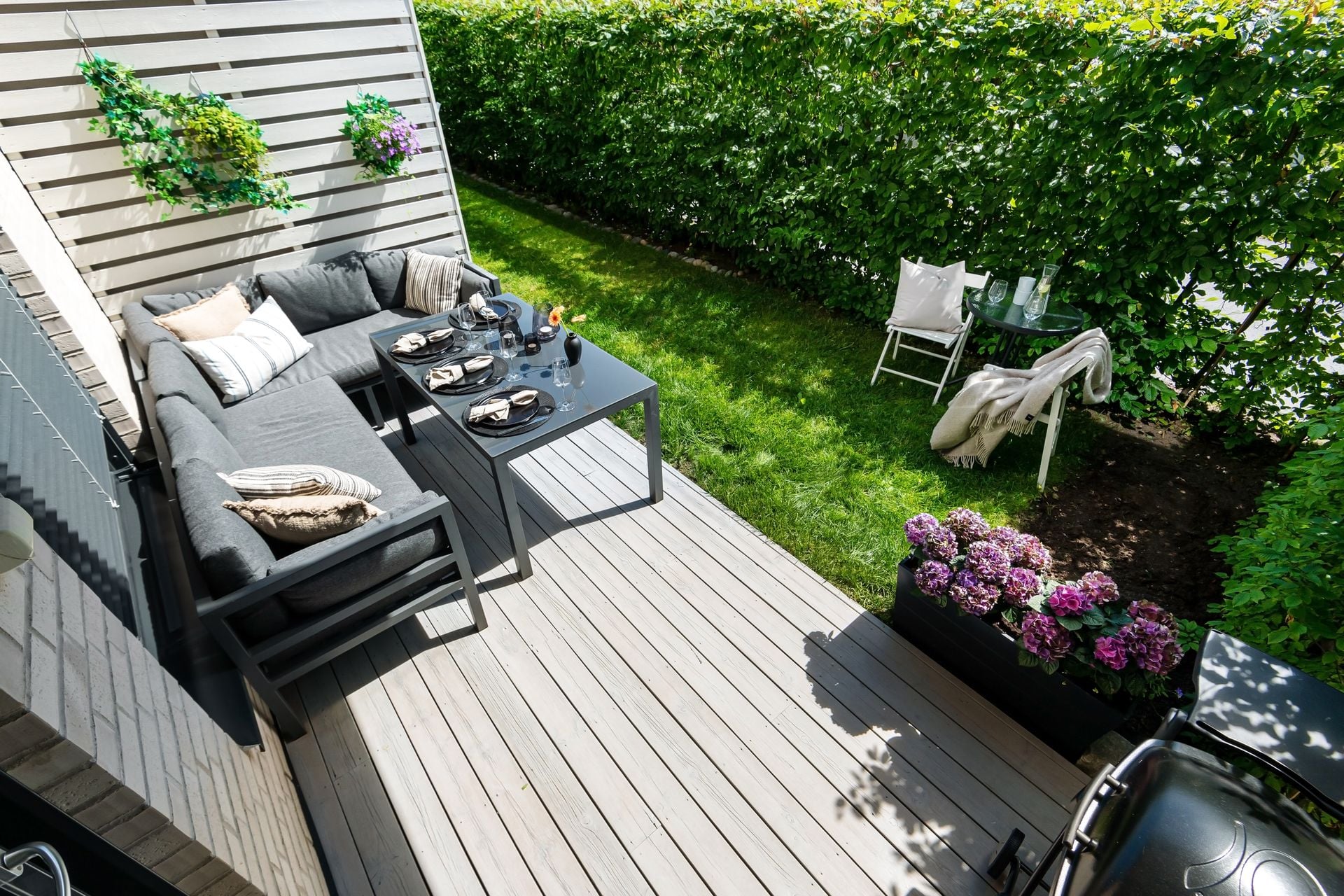
Water that collects near a home can turn a usable backyard into a recurring maintenance problem. Muddy patches, pooling near the foundation, eroded soil, and damp areas along fences or patios are all signs that runoff isn’t moving where it should. The goal is to prevent it from concentrating in vulnerable areas and give it a safe place to go. Landscape design is key to achieving this.
Drainage problems are often easier to address when homeowners begin with observation rather than a quick fix. A single storm can reveal where water starts, where it travels, and where it remains after the rest of the yard has dried.
Identify the Source of the Water
Before changing the grade or installing a drain, walk the property during a steady rain and again after it stops. Look for water coming from roof downspouts, neighboring properties, hardscape surfaces, compacted lawn areas, and low spots near the foundation. Make note of the direction water flows from the backyard toward the house, not just from the house toward the yard.
Pay close attention to the perimeter. Water may enter this area from a patio, driveway, side yard, or roofline before pooling against the home. Staining on masonry, consistently wet mulch, soft soil, or repeated puddles can help pinpoint the trouble area. A simple sketch of the yard, including downspouts, slopes, fences, and existing drains, can make planning more practical.
Keep Roof Runoff Away From the Foundation
Downspouts are a common source of concentrated water. If they discharge immediately beside the house, they can saturate the soil near the foundation even when the rest of the yard drains reasonably well. Check that gutters are clear enough to carry water effectively and that downspouts direct discharge away from the building.
Extensions, buried outlet lines, or carefully planned splash areas may help move water toward a suitable part of the yard. The endpoint matters as much as the extension itself. Avoid sending water toward a neighbor’s property, a walkway, or another low area that can’t handle additional runoff. If a buried line is considered, plan its route carefully and confirm where it can release water safely.
Correct the Grading Where Necessary
The ground immediately around a home should encourage water to move away rather than settle against the walls. Over time, mulch, soil movement, settling, and previous projects can create shallow dips that direct runoff back toward the foundation. Small regrading work may help when the issue is localized, while broader slope concerns may need a more complete plan.
Use appropriate soil for grading rather than relying on loose mulch to build up an area. Mulch is useful for planting beds, but it can shift and decompose. When adding soil near the home, keep it from covering siding, vents, or other building features that should remain exposed. If the slope is significant or grading would affect patios, retaining walls, or drainage beyond your property line, professional input can prevent a small correction from creating a larger issue.
Consider Drainage Features for Persistent Low Spots
If grading and downspout adjustments aren’t enough, a dedicated drainage feature may be appropriate. The right choice depends on how much water is involved, the soil conditions, available elevation, and the desired outlet location.
- Swales are shallow, broad channels that guide water across a yard without looking like a conventional ditch.
- French drains use gravel and perforated pipe to collect water below the surface and move it toward an outlet.
- Catch basins can collect runoff from hard surfaces or concentrated low points before it enters a drainage line.
- Dry wells may be used where site conditions allow water to disperse below ground rather than flow across the surface.
- Rain gardens can be designed to temporarily hold and filter runoff in a planted area, provided they are placed appropriately away from the home.
Each of these options requires a clear plan for where the water will ultimately go. Installing pipe without a workable discharge point can simply move the pooling problem from one part of the yard to another.
Protect Hardscape and Soil
Water that rushes across a patio edge, along a fence, or down a bare slope can carry soil with it. Watch for mulch washed onto walkways, exposed roots, ruts in the lawn, and gaps beneath hardscape. These signs suggest that water is moving too quickly or repeatedly through the same route.
Ground cover, planting, stone, edging, and gentle changes in grade may help slow and spread runoff in appropriate areas. Hardscape should also be assessed for its slope. A patio or walkway that directs water toward the home may need drainage improvements or correction before surrounding landscaping can perform as intended.
Plan Carefully Before Digging
Drainage work can involve buried utilities, irrigation lines, tree roots, and existing structures. Before digging trenches or installing drains, identify what may be below the surface and consider local requirements that could affect runoff, grading, or discharge. It’s also wise to think ahead about maintenance access, especially for basins, drain grates, and underground lines that may collect leaves or sediment.
Backyard drainage is most manageable when it’s addressed as a system. Begin with roof runoff and grading near the home, then evaluate how water travels through the rest of the property. With careful observation and a plan that respects the site, homeowners can reduce standing water, protect the perimeter of the house, and create a backyard that is easier to use after rain.