

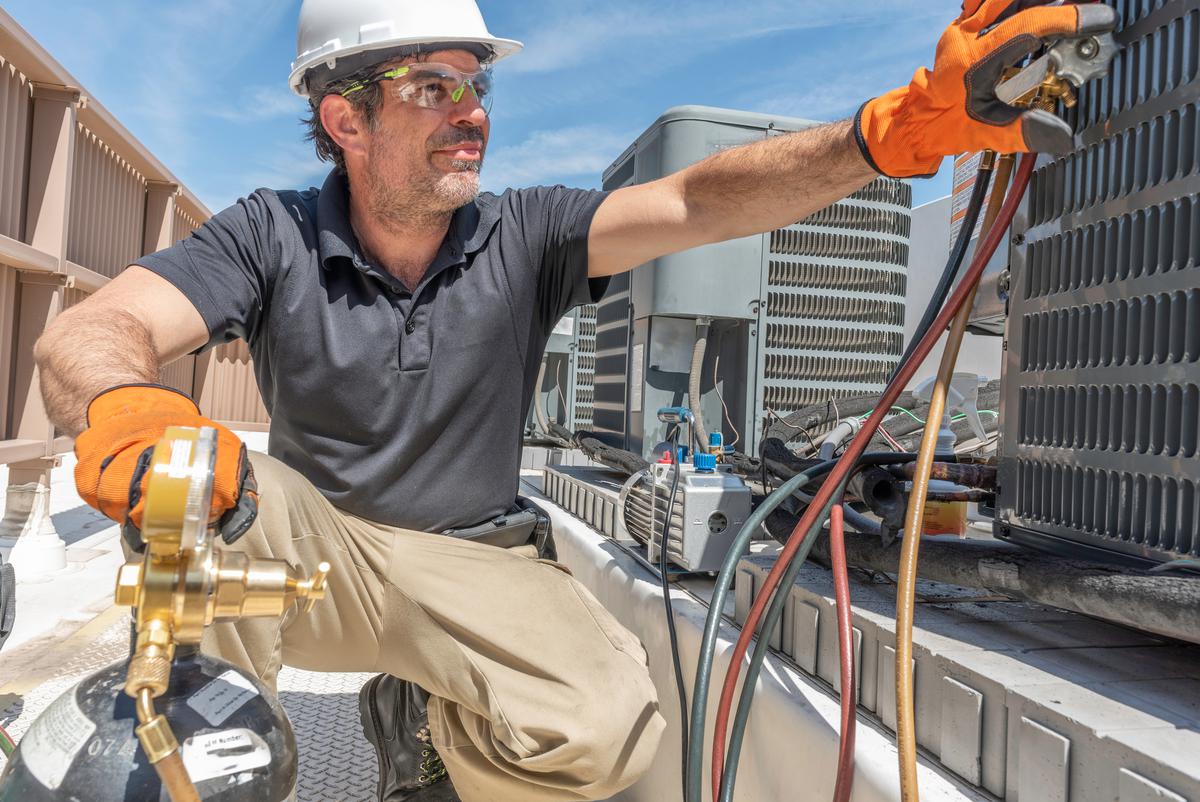
The listing photos are booked for Thursday and the drywall dust is finally gone. What is left is a fourteen-year-old condenser nobody wanted to spend money on, and a buyer’s inspector will be photographing its data plate within days. Sellers who get ahead of it hire one of the hvac contractors vineland nj flippers trust and document the system’s condition before listing day. The math is not complicated. A pre-listing inspection costs less than the credit a buyer asks for, and it hands you paperwork to answer back with.
Buyer Inspections Turn Small Flags Into Delays
A buyer’s home inspector is a generalist covering an entire house in three hours. He is not opening the blower compartment, so what lands in the report is a photo, a date code, and a line recommending a licensed professional. That single line is usually enough. Once it exists in writing, the agent has a reason to ask for money, and you are negotiating about a system nobody measured.
Spring makes this sharper in South Jersey, because the first genuinely warm week of the season is when a buyer finally runs the air conditioning. Cooling is where the market’s attention sits right now. AHRI reported shipments of central air conditioners and air-source heat pumps at 919,685 units in May 2026, up 6.7% from a year earlier, even as gas furnace shipments fell. An aging condenser outside a freshly renovated kitchen looks like the next expense, and buyers price it that way.
What Separates a Real Inspection From a Glance
A pre-listing inspection worth paying for takes a couple of hours. The technician pulls the panel on the air handler, reads refrigerant charge against the manufacturer’s spec, and checks the contactor for heat damage. The thermostat gets tested on a heat call and a cool call. Duct runs in the attic get looked at, filter size gets written down, and the condensate drain gets cleared if it is packed. What usually turns up is a dirty evaporator coil and a capacitor drifting out of tolerance, not a dead system.
A flipper finishing a 1960s ranch outside Millville found this out in the middle of a spring selling season. His buyer’s inspector flagged rust at the flue, and the deal sat nine days while two contractors argued about whether the furnace was safe. One afternoon of work beforehand would have settled it.
Some findings are not negotiable at any price. If a technician finds a cracked heat exchanger, the furnace gets shut down until it is repaired or replaced, and working carbon monoxide alarms belong in the house. Efficiency is the part a seller can document and use. Virginia Cooperative Extension rates an AFUE 80 furnace at 80% of its fuel converted into usable heat, while older units sit in the 50s and 60s. Handed over as a written report, that number does the arguing for you.
Questions to Ask Before Hiring an Inspector
Most of the vetting happens on the phone, in about four minutes. A seller typing hvac contractors vineland nj into a phone at ten at night gets a page of names and no way to rank them. Ask these five questions and listen for whether the answers carry numbers or only reassurance.
- Do you provide a written report with photos, model numbers and serial numbers? A good answer includes a sample report sent the same day.
- What does the inspection cover beyond the furnace and the condenser? Ductwork, thermostat operation, refrigerant charge and electrical connections should all be named without prompting.
- Are your technicians EPA certified to handle refrigerant? The answer should be yes with no hesitation, since handling a charge is federally regulated work.
- If you find a problem, is the repair quoted separately from the inspection fee? You want the diagnosis and the estimate itemized, not bundled.
- How soon can you get here, and will you come back for a re-check before closing? Ask for a specific number of days, not soon.
Be careful with the contractor who jumps straight to a replacement quote. Selling a full system swap on a house you are handing over in three weeks does not help you close. The answer worth paying for is often that the equipment has six or seven good years left, stated in writing.
Credentials and Certifications That Actually Matter
Certifications are not decoration here, because the buyer’s side will read the letterhead. EPA Section 608 certification covers the handling of refrigerant, and any technician touching a charge should hold it. NATE certification is a knowledge test rather than a license, and it is a fair signal on a technician’s bio. Licensing rules vary by state, so ask for the license number and verify it with New Jersey’s licensing board rather than taking it on faith.
Insurance matters here for a different reason. You are letting someone open a gas appliance in a house you still own, so liability and workers compensation coverage should be on file first. Ask for the certificate, not the promise.
What the Weeks Before Listing Should Look Like
Work backward from the listing date, not forward from the inspection. Book the visit about four weeks out, while there is still time to fix whatever the report finds. In the first week you should have the written report, the photos, and a repair estimate if anything needs attention. By week two the small items should be done, a capacitor, a contactor, a coil cleaning, the things that remove a paragraph from the buyer’s report. Week three is for the re-check and the copy that goes in the disclosure folder.
After that the timing takes care of itself. If an offer lands within 14 days of listing, the buyer’s inspection follows a few days behind it. Having the report already in the folder turns that appointment into a formality instead of a renegotiation.
Choosing Well Before the Sign Goes Up
The cheapest inspection is not the one to book, and neither is the one thrown in free with a replacement quote. What you are buying is a document with model numbers, measurements and a date, produced by somebody with no stake in a replacement. That document is what keeps a routine buyer inspection from becoming a five-day pause and a credit you never budgeted. Hire for the report, schedule it before the photos, and let the buyer’s inspector confirm what you already know.
 Headlines Team