

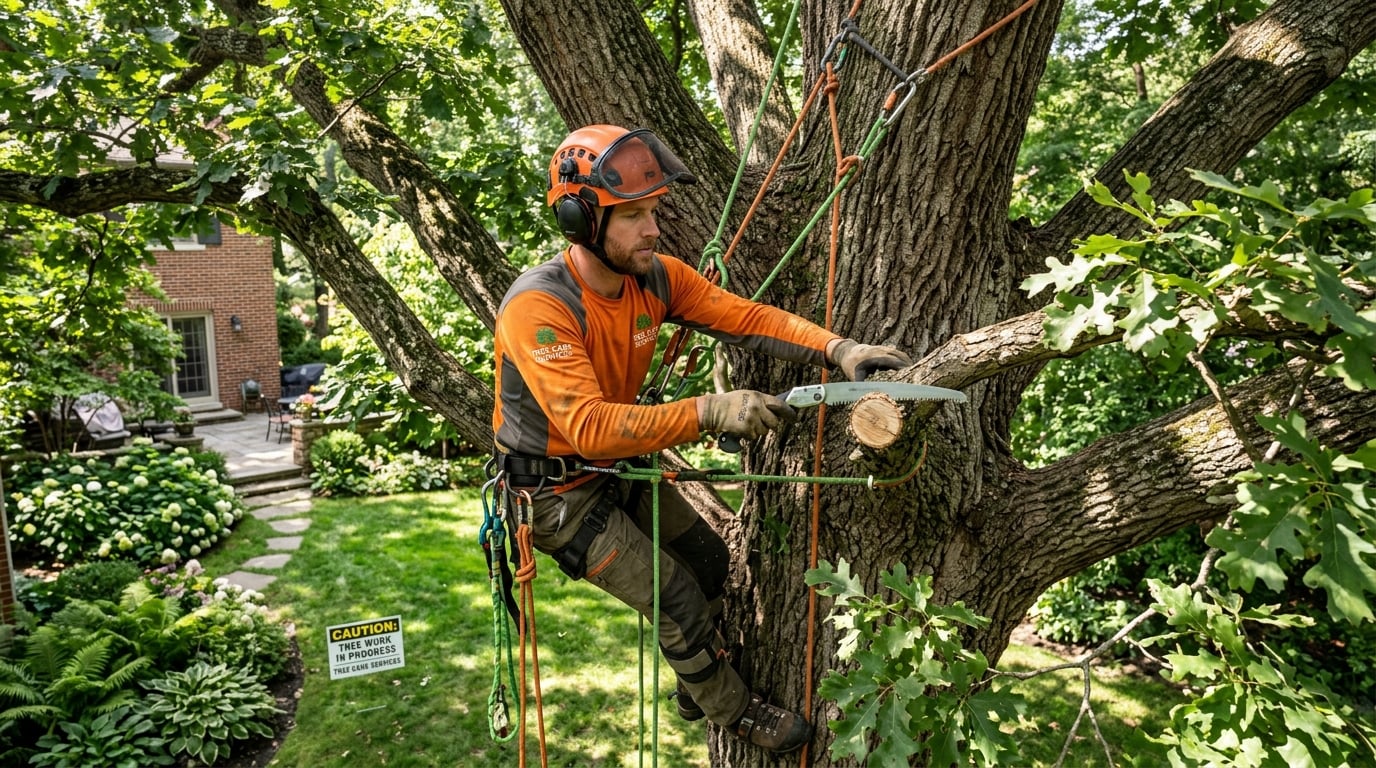
A landlord I know owns five rental houses on Pittsburgh’s north side, and for eleven years he never spent a dollar on a tree. Then a buyer’s inspector spent ten minutes under the silver maple behind one of his duplexes, and by that evening the guy was pricing out tree maintenance pittsburgh pa crews on his phone. His note ran four lines: a split trunk union, deadwood over the neighbor’s garage. Nothing had fallen. No claim, no injury. The tree had been growing without supervision since before he bought the property, and the first person to put a price on that neglect was the one person he could not afford.
Here is the argument, stated plainly. Tree upkeep across a rental portfolio is an asset protection line item, not landscaping, and owners who schedule it spend less than owners who wait for a reason. Roofs leak on a timeline you eventually notice. Trees keep no calendar.
Tree Risks Landlords Miss on Walkthroughs
A quarterly drive by catches gutters, grass and graffiti. It does not catch the things that generate claims. What we see most often is a shade tree that was never structurally pruned when it was young. It grew two competing trunks with bark pinched into the split, and now hangs forty feet of leverage over the spot where a tenant parks. Deadwood above a walkway belongs on the same list, along with roots lifting a public sidewalk and ivy hiding a trunk nobody has looked at in six years.
None of that shows up on a rent roll. All of it shows up in a pre sale inspection report, in a neighbor’s demand letter, or in an adjuster’s questions after a wind event. The gap between those two documents is where landlord money quietly disappears.
A Season by Season Maintenance Checklist
Work the calendar and the whole thing gets cheap. Late winter, roughly January into March around Allegheny County, is the best window for structural pruning on most hardwoods. The leaves are down, the architecture of the tree is visible, and the tree is dormant, so a crew corrects in February what it could not even see in July. Early spring is triage after the freeze and thaw cycles: hanging limbs, cracked unions, whatever the last four months loosened. Summer belongs to the young trees you planted for curb appeal, because the first three years decide whether you own an asset or a liability. Midsummer is also when canopy meets roofline, and limbs resting on shingles cost you a roof section long before they ever cost you a tree. Fall is the inspection pass: walk every property, look up, write down the deadwood, and book removals before December. By January every crew in the region is running storm calls at storm prices. That last one is what landlords learn the expensive way.
One caution here is not optional. Never prune a limb near a service drop or any power line yourself, and do not let a handyman try it. Call the utility or hire a line clearance qualified crew, and stay on the ground. In June 2026, NBC10 Philadelphia reported that a 31 year old professional tree worker in Berks County was killed when his equipment contacted an electrical line, and OSHA opened an investigation. That was a trained man with real gear. An extension ladder and a pole saw in the same spot is worse in every way.
The checklist itself fits in a phone note. Structural pruning on a three to five year cycle for mature shade trees, one documented look at every property each year, and deadwood removed as it is found. Add a written risk evaluation on anything with a target beneath it: a driveway, a porch roof, a neighbor’s sunroom. Most small portfolios need nothing beyond that. What they need is one person who actually owns the calendar, and that is usually the part that never happens.
Questions to Ask a Tree Crew You Hire
Price per tree tells you almost nothing. Two bids on the same maple can sit six hundred dollars apart because one crew is climbing it and rigging limbs down over a garage. The other plans to drop it whole and let a helper sort out the mess. Ask a few things before you compare numbers.
- Are you licensed and insured, and can I get a certificate of insurance listing my LLC? A good answer shows up as a PDF the same afternoon.
- Who on the crew holds an ISA certification, and will that person actually be on my property? A good answer names the individual.
- How much live crown are you taking off this tree? A good answer is a specific percentage, not whatever it needs.
- If a limb damages the garage, who calls it in and whose policy pays? A good answer names their carrier without pausing.
Any crew worth hiring answers all four without hesitating. Get the scope in writing with the specific trees identified, because a verbal scope is how landlords end up paying for a topped tree that has to come out anyway in eight years. On most jobs the estimate and the written scope arrive together, and a company that resists paper is telling you something.
Treating Tree Upkeep Like Any Asset
Think about the canopy the way a lender thinks about deferred capital expenditure on a building. Skipping a year never lowers the bill, it moves the bill and adds to it. The crew you eventually call is working at emergency rates, with a bucket truck sinking into a wet yard on a Saturday. Deferred maintenance compounds the same way whether the asset is a boiler, a parking lot or a beech.
The value side is real, and it is uneven. Researchers publishing through the USDA Forest Service reported that tree cover moves home sale prices with an elasticity near 0.013 in neighborhoods above 25 percent canopy, against roughly 0.003 where cover sits under 10 percent. The same dollar returns several times more on a leafy street than on a bare one. Which means a blanket budget is the wrong instrument. Put the money where the canopy already is, keep the risk trees off your liability sheet everywhere else, and book tree maintenance pittsburgh pa work on a standing schedule rather than the morning after a storm. Five houses, one afternoon a year, and the inspector finds nothing worth writing down.
 Headlines Team